
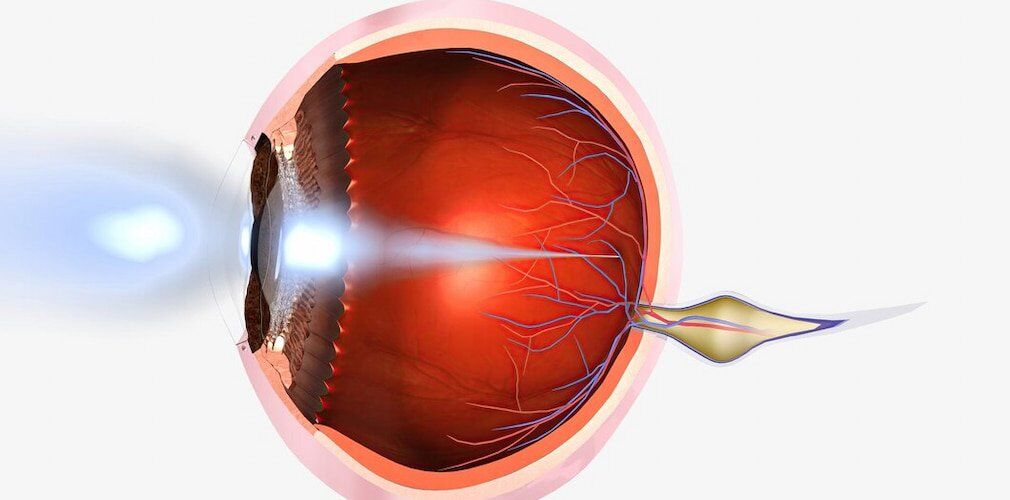
Central Retinal Vein Occlusion
It is an obstruction of a vein in the retina, either from the central vein or from one of its branches. The lack of blood return causes a “ponding” of the area altered by the occlusion.
It appears in approximately 1% of the population and represents 1 in every 1,000 consultations. It is more frequent in patients with glaucoma.
Symptomatology The clinical manifestations depend on the obstructed vein and will be more important the thicker the obstructed vein (the central vein is the most severe) and if they affect the macula.
They are classified as central vein occlusion and venous branch occlusion. If the occluded vein affects the macula, it will cause loss of vision due to edema (ponding) of the macula.
Exploration The ophthalmologist, when reviewing the fundus, will see the presence of edema of the retina and / or hemorrhages, more extensive the greater the occluded vein.
For their study, fluorescein angiography will be performed to determine the state of the retinal circulation and OCT (Optical Coherence Tomography) will be used as a method to quantify the amount of retinal edema (build-up of fluid).
Follow-Up In the mild cases due to the involvement of a peripheral vein or in cases of branch with good vision, only a control of the patient will be carried out. But in most cases of branch occlusion and in almost all cases of central occlusion, vision is diminished by edema of the macula and the patient should be treated.
Treatment It consists in the injection in the eyeball of an antiangiogenic medication or a steroid to control the edema of the retina. The frequency and number of injections will depend on the evolution of the case. There should always be strict control with the OCT to assess the response to treatment. Sometimes it is complemented with the performance of laser in the altered areas of the retina.
At Harley Street Hospital, we have the best doctors to diagnose and treat central retinal vein occlusion. Book an appointment to get a specialist´s opinion.
Frequently Asked Questions
Is central retinal vein occlusion serious?
Yes, central retinal vein occlusion is a serious condition that can cause sudden vision loss and requires prompt medical attention to prevent further complications such as permanent vision impairment or blindness.
What is the hallmark of central retinal vein occlusion?
The hallmark of central retinal vein occlusion is sudden painless vision loss or blurring in one eye, often accompanied by retinal hemorrhages, cotton-wool spots, and dilated tortuous retinal veins on examination. Early diagnosis and treatment are crucial to prevent vision loss.
What is the treatment for CRVO?
The treatment for Central Retinal Vein Occlusion (CRVO) may include anti-VEGF injections, steroids, laser therapy, or surgery, depending on the severity and complications associated with the condition, aiming to improve visual outcomes and manage complications like macular edema or neovascularization. Consulting with an ophthalmologist is essential to determine the most appropriate treatment plan.