
Rhinoplasty – Nose Surgery
27 May 2024
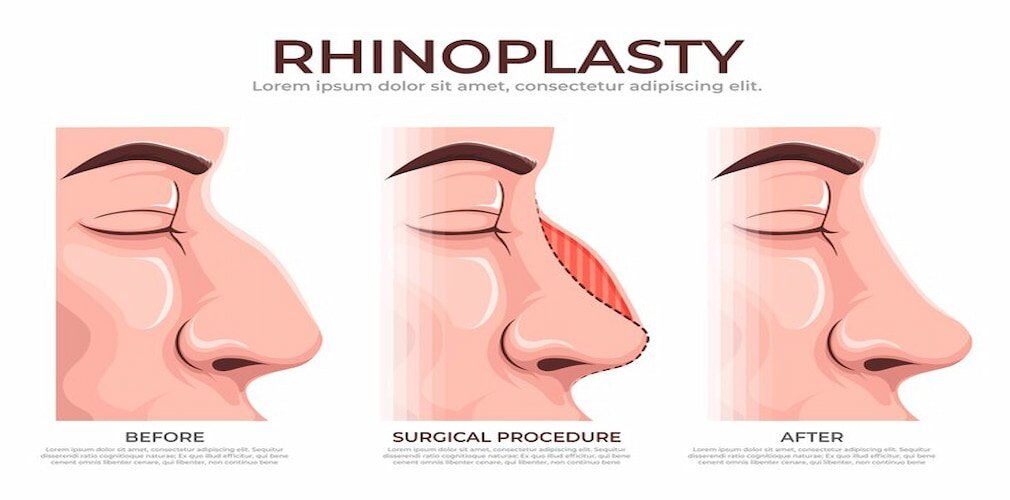
Rhinoplasty – Nose Surgery
Rhinoplasty is the surgical intervention that is practised to correct deformities of the nose. It consists, fundamentally, in modifying the nasal cartilage and bone structures to achieve a new shape that improves facial harmony. When, in addition, the deviation of the nasal septum is corrected to improve respiratory function, it is called rhinoseptoplasty.
The surgical procedure
The surgery, which is usually carried out under general anaesthesia or, in selected cases, with local anaesthesia and sedation, begins by approaching the nose through internal incisions, in such a way that there are no visible scars. The surgeon makes incisions and models the nasal bones and cartilage to achieve the desired shape. In some occasions, incisions are also made at the base of the nasal wings. To help shape or support the nasal pyramid, different tissues from the patient’s own (cartilage, bone) or, more rarely, synthetic materials are used as grafts.
Postoperative period
After the intervention, which usually lasts about an hour, a nasal tamponade is placed, which is usually removed in 2 to 4 days, except if a septoplasty has been performed, in which case it is left for up to five days. Also, a plaster splint is applied to the nose that is maintained for a week to 10 days.
Certain postoperative oedema and the presence of periorbital ecchymosis are common, especially if osteotomies have been performed, which usually subside after a week. Most patients will be able to return to normal life in about 8-10 days.
The results
You cannot make a judgment about the result of a rhinoplasty until several months, even a year, have passed. This is the time that the tissues need to stabilize and the scars to carry out their maturation process. The intention of the rhinoplasty is that the “new” nose does not attract attention, and is fully integrated into the general context of the face, producing a harmonious and pleasant set.
On some occasions, whether due to serious initial anatomical changes, tissue healing disorders, postoperative trauma, etc., the perfection of the result is not achieved (asymmetries, irregularities in the nasal contour, etc.), so A surgical retouching may be necessary, in which case it will be carried out after six months.
Who is a candidate for rhinoplasty?
The ideal candidates to undergo rhinoplasty are those people who are looking for improvement, and not absolute perfection, in their appearance. If you are in good general health, have psychological stability, and are realistic in your expectations, you will be a good candidate. Rhinoplasty will improve your appearance and self-confidence, but it will not make us look like someone else or be treated differently. Before deciding whether to have a rhinoplasty, think about what you want to achieve and discuss it with your plastic surgeon.
Age should also be taken into account. Most plastic surgeons prefer not to perform cosmetic rhinoplasty before the age of 18. Likewise, it is important to consider the emotional and social adjustments of adolescents and be sure that it is they, and not their parents, who want to undergo rhinoplasty.