
Breast Enlargement Surgery
27 May 2024

Breast Enlargement Surgery
Breast enlargement surgery consists of the placement of prostheses or implants under the mammary gland or under the pectoral muscle in order to increase breast volume.
Breast implants are one of the most used tools in plastic surgery and their utility is either for aesthetics and reconstructive surgery.
Who can be a candidate for breast enlargement?
Regarding the aesthetic indication, the cases of women with little breast development and to achieve breast augmentation and repositioning in patients with sagging breasts due to pregnancy or significant weight loss are considered.
In terms of reconstruction, it is indicated when looking for symmetry in patients with breasts of different size and shape or for patients who have lost their breasts as a result of surgery to treat cancer of the mammary gland.
Special considerations
There are several factors that you must consider before making the decision of undergoing this aesthetic surgery:
- Have a complete breast development.
- Have a medical evaluation from the specialist.
- Have any associated pathologies under control.
- Discard any active mammary pathology by mammary ultrasound and/or mammography.
- Do not smoke or have stopped the habit 3 weeks before the procedure.
- Discontinue medications that alter coagulation (aspirin, for example).
- A woman who has a breast implant should have a checkup with her doctor once a year as part of her routine breast evaluation.
Types of implant
When a woman decides to have an operation such as breast enlargement, she faces an important decision. What type of prosthesis should I wear? As you may well know, there are different types of breast implants, which implies having to decide which will be the most convenient for you. Not all are equal and the specialized person of your intervention will be the one who best advises you.
Silicone implants
They are one of the most widely used types of prosthesis, and also the most recommended.
One of the main reasons for its recommendation is that in the event of a break in the prosthesis cover, it is very difficult for the filling to spill. In the event of a rupture, a decrease in the volume of the breasts will not be appreciated, therefore it is recommended to perform an MRI periodically to help detect ruptures.
In addition, the gel facilitates a much more natural appearance.
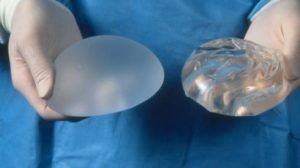
Saline implant
This type of prosthesis is made with physiological serum, it is a serum composed of water and salt that is used as a filler in the breast prosthesis. In case of breakage of this type of implants, this material is reabsorbed naturally.
Like silicone prostheses, saline implants also have a texture similar to natural tissue, but they have a drawback, which is the possibility of their deflation. They are somewhat harder than silicone ones and sometimes cause temperature changes in the area.
The surgical procedure
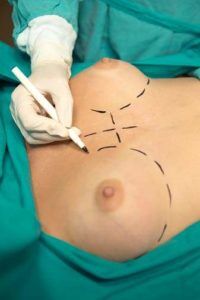
The surgeon will position the implant under the breast, usually under the pectoral muscle. The implant can be placed through four routes that leave different scars: the submammary, at the level of the lower sulcus of the breast, periareolar, around the lower edge between the areola, axillary, in one of the armpits and umbilical folds, which is used for the saline prosthesis.