Chronic Testicular Pain

Home » Archives for THS Hospital » Page 9

Chronic Testicular Pain

C

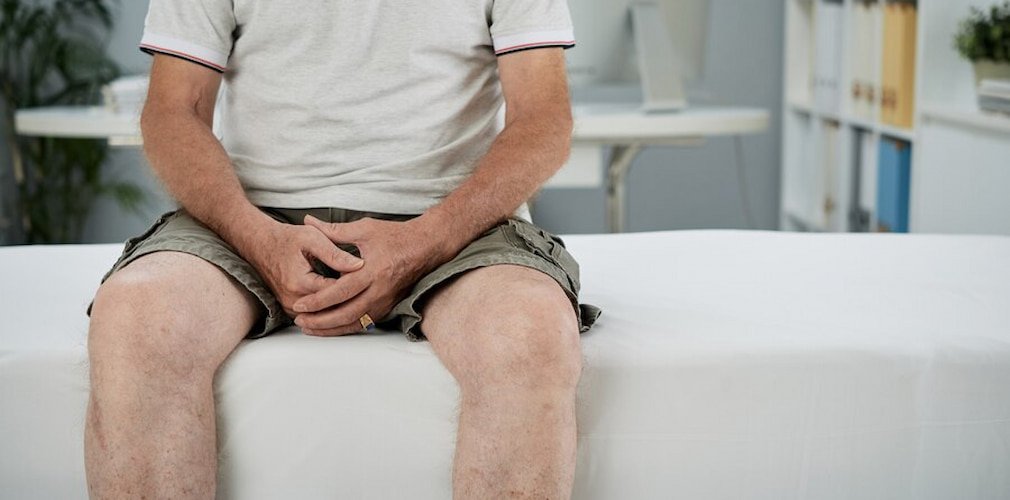
hronic testicular pain or chronic orchialgia is defined as constant or intermittent testicular pain, unilateral or bilateral, lasting 3 months or more, affecting the daily activities of the patient until they seek medical attention. Some authors report that in 25% of cases of orchialgia cannot identify a specific etiology.

The specific causes of chronic orchialgia include infectious processes such as urethritis and prostatitis, testicular tumors, inguinal hernias, hydrocele, spermatocele, varicocele, referred pain, traumatisms, intermittent testicular torsion, prostatodynia / non-bacterial prostatitis and neuromuscular dysfunction of the pelvic floor (chronic genital pain). The management of patients with chronic genital pain is complex. Some of these patients typically attend anxiety, they are tense and frequently worried about the possibility of being carriers of some serious pathology. Usually, they have already been treated without achieving positive results.

Medical management
When considering treatment options in patients with chronic orchialgia, it should be initiated with non-surgical options. The use of jockstrap and the modification of postural habits and the pattern of exercise. Antibiotic, anti-inflammatory, analgesic agents or a combination of these are used.

Surgical management
When medical management does not resolve the clinical condition, or if the patient has an obvious surgical pathology, doctors can consider surgical treatment for pain control. In this regard, it is important that the patient is aware that the surgery does not guarantee adequate symptomatic control and that before the surgical decision is has been offered adequate medical treatment.

Surgical options for the treatment of chronic orchialgia include corrective procedures for specific pathologies such as varicocele cure, hydrocele cure, orchidopexy, vascular anastomosis, and even removal of non-absorbable suture material in postoperative orchialgia.

Chronic Pelvic Pain

Chronic Pelvic Pain

C

hronic pelvic pain (CPP) is one that is located at the level of the lower abdomen, the pelvis or intrapelvic structures, persisting for at least six months, which occurs continuously or intermittently.
If it is not acute and the mechanisms of central pain sensitization are well documented, pain is understood as chronic regardless of the elapsed time. In all cases, it is frequently associated with negative consequences in the cognitive, behavioral, sexual and emotional areas.
Chronic pelvic pain is a complex condition in which symptoms of the reproductive, urological, gastrointestinal, abdominal wall, pelvic floor, and psycho-social factors are frequently intermingled, so an exhaustive clinical history becomes very important.

M

ultidisciplinary management of pain
CPP is a symptomatic complex that can originate from gastrointestinal, urological, reproductive, musculoskeletal or neurological diseases. When the cause of the pain is evident, the treatment is directed to treat it. However, a subgroup of patients persists with pain despite treatment of the underlying cause.  It is in this context that the multidisciplinary management of CPP, with the planned and interactive participation of different specialists (urologist, gynecologist, gastroenterologist, coloproctologist, pain specialist, psychiatrist, psychologist, kinesiology among others) is very important in both the study and treatment.

Multimodal therapy is redirected to treat the pain and the underlying cause -if it exists- and all those biological, psychological and environmental factors that are influencing.

A proper therapy of this condition includes medical treatment (non-steroidal anti-inflammatory drugs, opioids, antidepressants, neuromodulators, muscle relaxants, alpha blockers), but also psychotherapy, non-pharmacological therapy of the pelvic floor (biofeedback, myofascial massage), pelvic floor pharmacological therapy (injections in points trigger, botulinum toxin), bladder instillations, neuromodulation and surgical interventions (adhesiolysis, uterine neuroablation, presacral neurectomy) when appropriate.

At The Harley Street Hospital, we have the best specialists who can help you to treat chronic pelvic pain effectively. Book a consultation.

Hypogonadism

Hypogonadism

M

ale hypogonadism is common and is not often diagnosed or treated. It causes small male sexual organs.The normal gonadal function guarantees the execution of the reproductive and sexual mission of man. The alterations to this level lead to dysfunction of various organs such as the brain, muscle, and sexual area.

The functioning of Hypothalamus-pituitary-gonadal axis depends on the secretion of several hormones: Gonadotropin-releasing hormone (GnRH), follicle stimulating hormone, (FSH) and luteinizing hormone (LH).

Hypogonadism or decreased gonadal function represents an alteration of the aforementioned hypothalamic-pituitary-gonadal axis.

Causes of male hypogonadism.

Male hypogonadism occurs when the testicles leave of producing sperm, testosterone or both.
There are three basic mechanisms:

1. An intrinsic testicular damage (primary hypogonadism).
2. An abnormality of the hypothalamic-pituitary axis (secondary hypogonadism).
3. A diminished or absent response from the target organs
(skin, hair, and prostate) to androgens (androgenic resistance).

In the first two cases, hormonal production is decreased but the hormonal response is normal; at the third case the production is normal but the answer is diminished.

If it occurs after puberty, the skeletal proportions and the size of the penis are normal. The testicles are not so small as in prepubertal failure but are soft and have a volume of less than 15 ml. The body hair disappears almost completely and the decrease in libido (sexual desire) is notorious. Over the years, osteoporosis occurs if the patient is not treated.

The management of men with hypogonadism has two objectives: achieve fertility and improve sexual characteristics. When there is testicular damage it is not possible to correct fertility. However, when the alteration resides in the hypothalamus, or in the pituitary it is possible to fulfill this objective.

.

Urethral Stricture

Urethral Stricture

T

he Urinary system is constituted by the kidneys, ureters and the urethra. The urethra is a tube structure through which the urine expels abroad.

Urethral stricture is a condition which basically consists of a narrowing of the urethra.

This can be caused by injury, instrumentation, infection, and certain non-infectious forms of urethritis.

Currently, it is considered that urethral strictures develop secondarily to a process of scarring or fibrosis of the urethral mucosa and/or periurethral tissues, so any process that conditions a trauma can propitiate a urethral stricture.

So, here´s a brief explanation of 3 treatment options:

  • Urethral dilatations:
    The first treatment described for this pathology is periodic urethral dilation, which is recommended in stenoses smaller than 2 cm. A complication rate or failure rate has been reported with this treatment in 32% of patients. Some authors consider it as a non-curative therapy, so it has been replaced by balloon dilatations, stents, and direct visual internal urethrotomy (DVIU).

  • Internal urethrotomy:
    It has become the most used technique compared to urethroplasty, since it is considered a simple, safe procedure, with a short and simple convalescence time to perform despite having a risk of recurrence during the first 6 months of a 50%. The objective of this technique is to allow reepithelialization before the scar is faced again, with which the urethral scar would be remodeled to an open position.

  • Urethroplasty:
    The technique consists of opening the urethra at the level of the penis or perineum, with excision of the segment that presents the stenosis. Depending on the location and length of the stenosis, the reconstruction can be performed in a single time or it may be necessary to leave the urethra open to facilitate its regeneration, proceeding to the final reconstruction in a second time.

Frequently Asked Questions

Urethral stricture is a condition which basically consists of a narrowing of the urethra.

There are a 3 alternative treatment options. you can find an explanation of these 3 options down below:

Urethral dilatations:

The first treatment described for this pathology is periodic urethral dilation, which is recommended in stenoses smaller than 2 cm. A complication rate or failure rate has been reported with this treatment in 32% of patients. Some authors consider it as a non-curative therapy, so it has been replaced by balloon dilatations, stents, and direct visual internal urethrotomy (DVIU).

Internal urethrotomy:
It has become the most used technique compared to urethroplasty, since it is considered a simple, safe procedure, with a short and simple convalescence time to perform despite having a risk of recurrence during the first 6 months of a 50%. The objective of this technique is to allow reepithelialization before the scar is faced again, with which the urethral scar would be remodeled to an open position.

Urethroplasty:
The technique consists of opening the urethra at the level of the penis or perineum, with excision of the segment that presents the stenosis. Depending on the location and length of the stenosis, the reconstruction can be performed in a single time or it may be necessary to leave the urethra open to facilitate its regeneration, proceeding to the final reconstruction in a second time.

Male Subfertility

Male Subfertility

S

ubfertility is a medical term that refers to a form of diminished fertility which implies an extended period of undesirable non-conception.

Infertility is defined as the inability to achieve a spontaneous pregnancy after one year of sexual intercourse without the use of contraceptive methods. Approximately 15% of couples consult for this reason. The male factor is the only responsible in 20% of cases, and contributes to the infertility of the couple 50% of the time. When faced with a male factor, a quantitative or qualitative alteration of one or more seminal parameters will always be observed.

Male subfertility or infertility can be caused by a variety of conditions. Some of them can be identified and treated, such as hypogonadotrophic hypogonadism; others are diagnosed, but do not have a specific treatment, such as genetic alterations or testicular atrophy. In 30-40% of patients with spermiogram alterations, physical examination and laboratory tests fail to objectify a specific cause of infertility, classifying these patients as carriers of an idiopathic male infertility. The different sperm retrieval techniques, which extract gametes from different regions of the male reproductive system, have achieved that couples with severe male factor without specific treatment can achieve pregnancies and offspring. Carrying out a complete study of these patients will allow the specialist:

  • Treat correctable alterations.
  • Identify the conditions without specific treatment, to offer assisted reproduction techniques using the patient’s sperm.
  • Identify the conditions where it will be impossible to recover viable male gametes, being able to offer techniques of assisted reproduction with donor sperm or adoption.
  • Recognize serious illnesses that may be manifesting as infertility.
  • Diagnose genetic alterations that may affect the health or reproductive potential of the offspring.

At Harley Street Hospital, we have the best doctors to treat this condition. Book a consultation to get a specialist´s opinion.