What are the treatment options for Dupuytren’s contracture?


Home » THS Hospital Blog » Orthopaedics » Hand and Wrist Surgery

What are the treatment options for Dupuytren’s contracture?

D

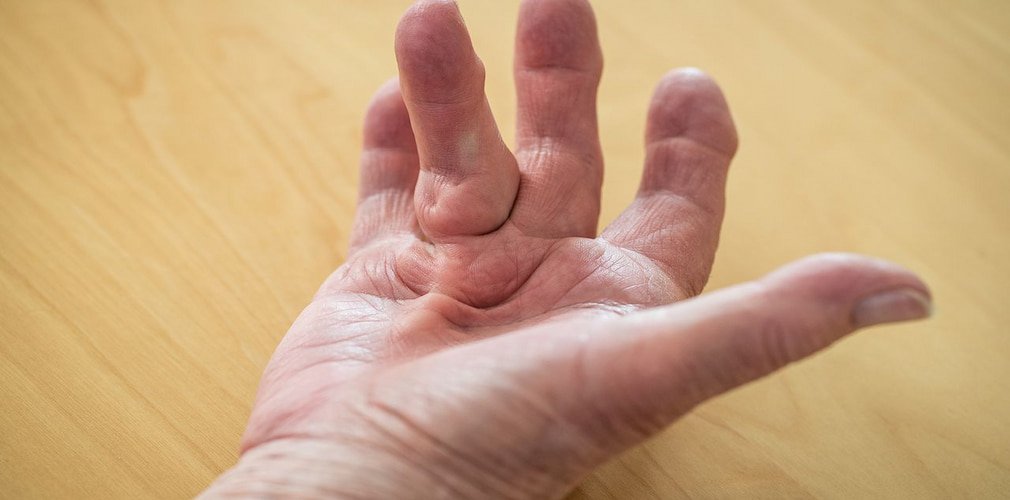
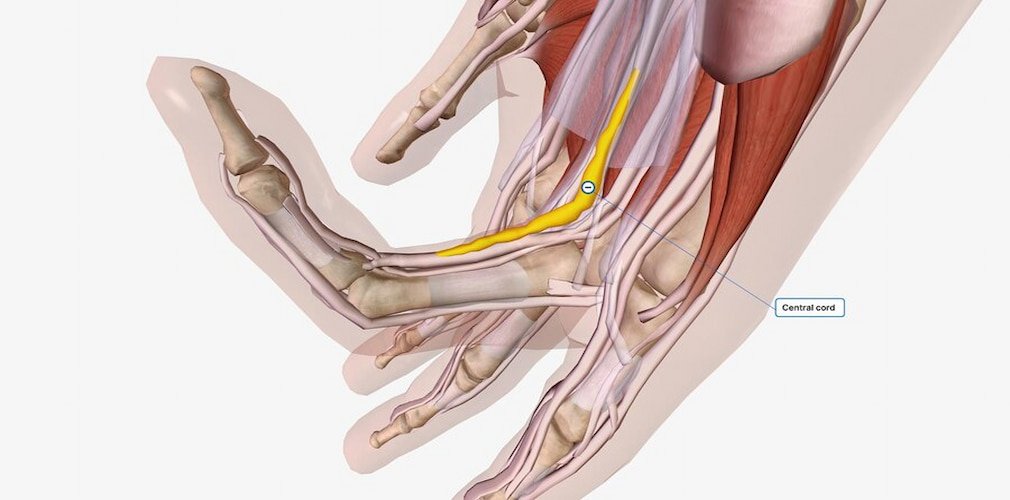
upuytren’s contracture is a condition of the hand where fibrotic tissue accumulates that causes a retraction of the flexor tendons and therefore the fingers are flexed. Guillaume Dupuytren (1831) was the doctor who described its pathological anatomy, clinical course and possible aetiology, in addition to proposing a treatment. It is retractable sclerosis of the palmar fascia, this flexion contracture generates disability due to the loss of the basic functions of the hand. It is more frequent in men, especially manual workers and usually has a family inheritance although little is known about its real causes. It affects more the ring and little fingers and more rarely the thumb. In 40%-65% of patients, the disorder is bilateral (in both hands).

Signs and symptoms of Dupuytren’s contracture

One or both hands may be affected, the ring finger is affected more frequently, followed by the little finger, the middle finger and the index finger. A small, painless lump develops in the tissue under the skin on the palm side of the hand. Over time, it thickens and forms a cord-like band. It becomes difficult to extend or straighten the fingers. In severe cases, stretching them is impossible, therefore the only solution is a surgery called Fasciectomy.

Dupuytren’s contracture surgery

Any Several experts agree that partial fasciectomy is the only valid treatment for Dupuytren´s contracture, which refers to excision of diseased and thickened fascial tissue, generally in longitudinal and zig-zag incisions (in the case of multiple compromised fingers). Complete fasciectomies involve removing the entire palmar fascia, it is indicated in advanced contractures. Post-operative rigidity is frequent due to hematoma and oedema, therefore early passive mobilizations are indicated.

Treatment of Dupuytren’s contracture

Physiotherapy is the best way to go in a post-operative Dupuytren’s contracture since effective results have not been shown with conservative treatment. There is no proven effective non-surgical treatment method, such as vitamin E intake, and local steroid injection, electrotherapy, in addition to ultrasound, they are not beneficial.

Application of stretches of the contracted “cord” have not shown good results. Some experts propose the continuous extension technique by placing a tutor or external fixator, which exerts passive traction on the finger and which was initially used in isolation but it is currently used as a pre-surgery treatment for severe digital retractions.


The post-operative physiotherapeutic objectives for Dupuytren’s disease

1. Minimize the effects of oedema and healing adhesions.
2. Maintain the extension of the interphalangeal and metacarpo-phalangeal joints achieved in surgery.
3. Recover the flexion of the fingers.
4. Recover the strength and resistance of the hand (Intrinsic and extrinsic muscles).
5. Active and passive exercise program to maintain hand mobility.
6. Exercise program with specific functions of the hand (gripper, grip, opposition, and others ..)

The rehabilitation and physiotherapy program must be applied after all hand surgery, including this pathology. Failure to attend physiotherapy and rehabilitation sessions results in failure of the surgery and the inadequate restoration of functions.
Dupuytren’s Contracture Surgery


Home » THS Hospital Blog » Orthopaedics » Hand and Wrist Surgery

Dupuytren’s Contracture Surgery

D

It is a surgical procedure used to treat a chronic condition of the hand, which causes retraction of the superficial palmar fascia, along with deformity and progressive flexion of some fingers, thus compromising mobility and the development of the basic functions of the hand.

The signs of the disease are manifested by a painless thickening and retraction of the fibrocartilaginous tissues, which are found under the skin of the palm of the hand, extending slowly and progressively, in the form of a fibrous cord towards the fingers, mostly annular and pinky finger. As the disease progresses, these fibrous cords contract, causing permanent flexion of the fingers toward the palm of the hand, causing severe functional limitations.

Dupuytren’s contracture is more common in men than in women and usually occurs after 45-50 years old. In approximately 40% of patients, the involvement can manifest bilaterally (both hands). Although the origin of the disease is unknown, it is confirmed that there are factors that increase the risk of triggering it, such as:

  • Diabetes.
  • Stress.
  • Epilepsy.
  • Smoking.
  • Alcoholism.
  • Hereditary factors.
  • Immunological factors.
  • Repeated microtrauma to the hand.
When is surgery an option?

Surgical treatment is considered the most effective when Dupuytren’s disease is already in very advanced states of contracture. This option is intended to recover the functionality of the hand, leaving the minimum possible aesthetic consequences.

There are different techniques with which to carry out the surgery, the choice of one or the other will be conditioned by:

  • The level of pathology involvement.
  • State of the skin of the hand.
  • The general condition of the patient, age, profession.
  • Mastery of the technique by the surgical team.
  • Technique.

Open surgery technique

Among the most widely used is selective palmar fasciectomy (open surgery technique), performed with a transverse incision in the palm of the hand that can be prolonged based on the extent of the pathology, towards the area of the affected fingers with a small zic-zac, following the lines of the skin to avoid retractable scars.

Through it, avoiding injury to neighbouring structures (nerves, vessels), surgical resection will be performed to remove the thickened pathological tissue (fascia) and thus be able to release the tendons, restoring mobility to the fingers.

The wound will be closed with intradermal suture (trying to make it as aesthetic as possible)

Anaesthesia: it will be carried out with loco-regional anaesthesia, and ischemia control (tourniquet).

Surgery duration: Between 40 – 60 minutes.

Analgesia: This is a painless procedure, but a post-surgical analgesic regimen will be established on demand.

Admission: Between 12 – 24 hours (sometimes it can be carried out under a major outpatient surgery regime).

Recovery Phase: Between 4 – 6 weeks (it will vary depending on the degree of involvement).

Incorporation into working life: it will depend on the type of work to be performed.

When is it indicated?

The surgery will be carried out by prescription, after ruling out less traumatic treatments, if:

  • There is a degree of digital deformity (severe), which prevents or limits the patient from carrying out their daily tasks.
  • Retraction causes painful episodes.
  • The thickening compromises the surrounding structures, causing secondary atrophies.

Frequently Asked Questions

Surgery for Dupuytren’s contracture can be successful in correcting hand deformities and improving function. Success rates vary based on factors like severity and surgical technique. Consulting a hand specialist is essential for personalised treatment recommendations.

Recovery from Dupuytren’s contracture surgery varies depending on the extent of the procedure and individual factors, but it typically takes several weeks to months. Full recovery, including regaining strength and range of motion in the hand, may take several months to a year with proper rehabilitation and follow-up care.

New treatments for Dupuytren’s contracture include Xiaflex injections to break down collagen build-up, minimally invasive procedures like needle aponeurotomy, and percutaneous fasciotomy. These options offer shorter recovery times and reduced scarring, but suitability varies based on individual factors.

Doctors Specialising in Orthopaedics

Lorem ipsum dolor sit amet, consectetur adipiscing elit. Ut elit tellus, luctus nec ullamcorper mattis, pulvinar dapibus leo.

What is Dupuytren’s Contracture?


Home » THS Hospital Blog » Orthopaedics » Hand and Wrist Surgery

What is Dupuytren’s Contracture?

D

upuytren’s contracture is named in honour of Guillaume Dupuytren, who, in 1831, made a description of the syndrome for the first time. He described its anatomical and pathological characteristics, in addition to proposing a treatment. Thus, Guillaume Dupuytren described this disease as hypertrophy or thickening of the palmar fascia.

Palmar fascia involves the muscles of the palm and consists of central, lateral, and medial portions.

What are the causes of Dupuytren´s contracture?

There are many theories about its cause, where genetics, fractures, stress, diseases such as diabetes or epilepsy, habits such as smoking or alcoholism and repeated microtraumas, seem to have a certain role. Family history, diabetes mellitus, liver disease, epilepsy, pulmonary tuberculosis, are risk factors.

This disease can occur in both women and men, being more frequent in the latter from the age of 40.

How does the disease evolve?

To better understand the pathological anatomy of this syndrome, we must know what is palmar fascia and fascial tissue. Well, fascia is a connective tissue system (similar to a cloth, located under the skin) that surrounds the entire body, continuously and in three dimensions. In the case of the hand, four fascial laminae are distinguished, the two laminae found on the palmar face being of greater interest for this disease: the deep lamina that covers the interosseous musculature and the superficial lamina, which thickens in its path, half forming the palmar fascia, in turn, attached to the superficial layer of the skin.

When we find restrictions in the palmar fascia that last over time, the skin of the hand begins to thicken and retract, forming fibrous proliferation, first in the form of nodules and then cords, which will gradually produce the flexion deformity of the fingers. The 4th finger is the most affected followed by the 5th, which will gradually limit the manipulative capabilities of the hand.

What can I do if I have Dupuytren´s contracture?

The disease progresses at an unpredictable speed. Physiotherapy treatment in initial stages (where myofascial induction, among other techniques, is of great interest to help slow the progression of contracture).

Physiotherapy is also useful after surgery in more advanced stages (when posing the hand on the table the palm is no longer in contact with it). It would try to return the manipulative functionality to the hand, gaining strength and mobility, keeping both the skin and the scars in the best possible condition.

Frequently Asked Questions

The main cause of Dupuytren’s contracture is believed to be a combination of genetic predisposition and environmental factors, leading to the thickening and tightening of the connective tissue in the palm of the hand.

Dupuytren’s contracture is most commonly found in individuals of Northern European descent, particularly men over the age of 40.

Non-surgical treatments like steroid injections, collagenase injections, or needle aponeurotomy may help manage Dupuytren’s contracture, but severe cases may still require surgery for optimal correction.

Doctors Specialising in Orthopaedics

Lorem ipsum dolor sit amet, consectetur adipiscing elit. Ut elit tellus, luctus nec ullamcorper mattis, pulvinar dapibus leo.

What are the treatment options for a Ganglion?


Home » THS Hospital Blog » Orthopaedics » Hand and Wrist Surgery

What are the Treatment Options for a Ganglion?

G

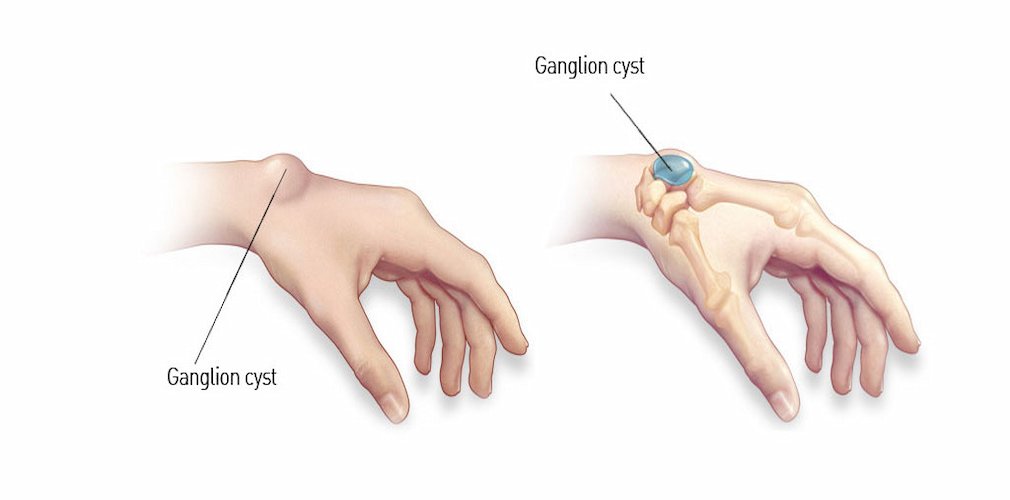
anglion (also known as synovial cysts) are very common lumps which sometimes grow on the hand and wrist. These cysts can be painful especially when they first appear or with constant and demanding use of the hand.
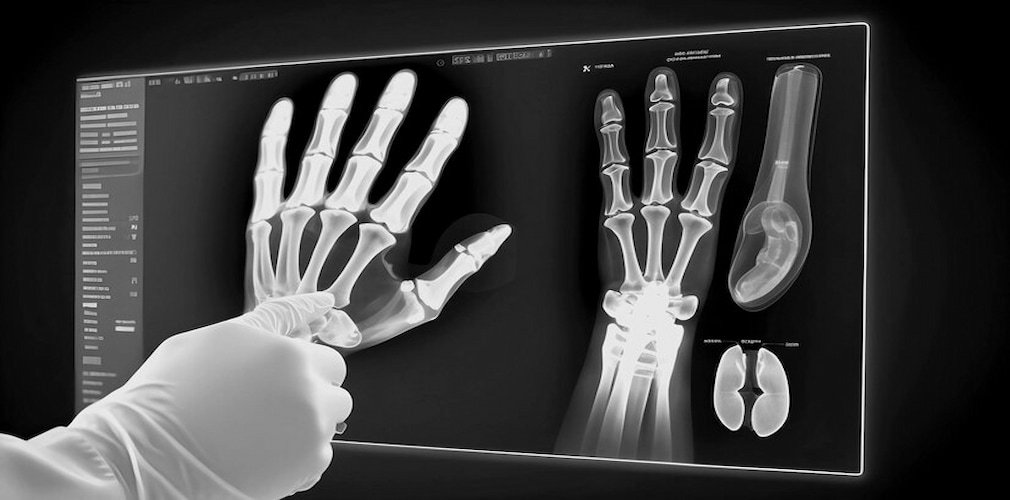
Diagnosis of a synovial cyst or ganglion is usually based on where it is located and what it looks like. Your hand surgeon may recommend an x-ray to rule out injuries to neighbouring joints.

What are the causes?

Maintained dorsal flexion postures of the wrist, such as carrying a heavy tray or doing push-ups, can facilitate the appearance of this open wrist as well as sudden braking movements from a blow or a fall with the hands in that flexed position, in addition to a malformation or alteration of the alignment of the carpal bones, can facilitate the appearance of the ganglion.

Treatment

Treatment of a synovial cyst or ganglion may simply be the observation of any changes. However, if the cyst is painful, limits activity or its appearance is unacceptable to the patient, another treatment may be recommended.

Treatment may include removing fluid from the cyst by aspirating it with a needle and/or using a splint to prevent movement. If these non-surgical treatments fail, your hand surgeon may recommend surgery to remove the cyst.

What is the surgical procedure about?

The goal of surgery is to remove the origin of the cyst. This may require removal of a piece of the joint capsule or tendon sheath close to the ganglion. If the ganglion is removed from the wrist, a splint may be recommended for the post-operative period. Some patients may experience pain, discomfort, and swelling at the surgery site, sometimes longer than others, but full activity may be resumed once the discomfort subsides. Even though surgery offers the best success results in removing the lymph nodes, these cysts may still recur.

What is the role of physiotherapy?

Treatment with physical therapy of the ganglion located in the wrist usually has a good result, especially in its initial stages, where manual therapy can be very effective.

The following are useful tools for you to be able to improve your injury:

  1. Self-massage for forearm anterior muscles.
  2. Forearm stretch.
  3. Wrist self-mobilization for ganglion.
  4. Traction and opening of the wrist.

Frequently Asked Questions

Yes, some ganglions may resolve on their own without surgery through observation, rest, and avoiding aggravating activities. However, if symptoms persist or worsen, medical intervention may be necessary.

The treatment of choice for a ganglion cyst often involves aspiration or surgical excision to alleviate symptoms and prevent recurrence.

The best way to remove a ganglion cyst is through aspiration, where the fluid is drained with a needle, or surgical excision performed by a healthcare professional to remove the cyst and its connecting stalk.

Doctors Specialising in Orthopaedics

Lorem ipsum dolor sit amet, consectetur adipiscing elit. Ut elit tellus, luctus nec ullamcorper mattis, pulvinar dapibus leo.

What is a Ganglion?


Home » THS Hospital Blog » Orthopaedics » Hand and Wrist Surgery

What is a Ganglion?

A

 ganglion is a benign cyst that forms on a joint or tendon. It is filled with a lubricating liquid that is used to reduce the friction that occurs when moving certain tendons and joints in our body. They are usually located in the wrist area, on the back of the hand, on the fingers, or on the instep. Less often they may also appear on the knee, shoulder, back, or other areas of the body.

What are the causes of the ganglion?

The causes of ganglions are unknown, although they have been attributed to rubbing or continued use of certain tendons or joints. Some ganglions may appear after hitting the area.

Symptoms of the disease

Symptoms are the appearance of a lump in a certain area, which may not produce symptoms, may hurt or may hinder the mobility of the joint where it is located. Sometimes they can decrease in size or disappear on their own after a while. Some ganglions are not visible to the naked eye and produce local pain, being diagnosed after performing special radiological tests such as MRI (Magnetic Resonance Imaging).

How are cysts diagnosed?

It is usually a simple diagnosis just by looking at it. Since it is filled with liquid, light passes through it, so intense light can be applied to the lump and demonstrate that light passes through it.
Occasionally, an X-ray, ultrasound, or MRI may be necessary to better view the area and reach a diagnosis.

What is the prognosis of the cyst?

The prognosis is good. Firstly, because even if it is a tumour, it is totally benign. Also, if proper treatment is followed, the cyst can easily disappear. There are even cases in which the cyst has disappeared on its own, without being subjected to any treatment. However, even if it is successfully removed, it can appear again.

Can it be prevented?

This type of cyst can be prevented by targeted relaxation exercises. This is especially important for those people who work long hours with the computer or doing activities that can affect joint tension, with repetitive movements. The ganglion is produced by the tension generated in the wrist, therefore, it is important to perform this type of stretching so that the muscles relax.


Frequently Asked Questions

Ganglions can sometimes resolve on their own but may require aspiration (draining fluid with a needle) or surgical removal for persistent cases, which is performed by a healthcare professional.

A ganglion is not a tumour but rather a benign cyst filled with fluid that typically forms near joints or tendons, causing swelling or discomfort.

If left untreated, a ganglion cyst may persist or grow larger, potentially causing discomfort, pain, and limited mobility. In some cases, it may spontaneously rupture or resolve on its own, but there’s a risk of recurrence.

Doctors Specialising in Orthopaedics

Lorem ipsum dolor sit amet, consectetur adipiscing elit. Ut elit tellus, luctus nec ullamcorper mattis, pulvinar dapibus leo.