Discharge from Eyes


Discharge from Eyes

O

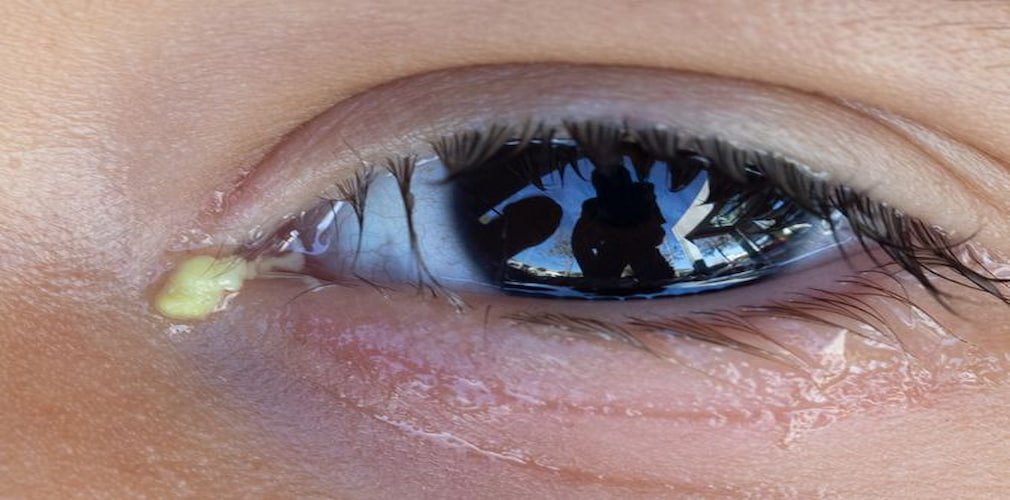
cular secretion is a fluid composed of mucus, oil, skin cells and other waste accumulated in the inner corner of the eye. Normally this secretion occurs while we sleep and can be wet or dry, depending on the level of fluid contained.

The ocular secretion corresponds to one of the many ways in which the body protects our eyes. This since said mucus removes potentially damaging waste and sediments from the tear film.

The presence of a mild ocular discharge upon awakening is normal, however, excessive secretion could indicate the presence of an infection or condition in the eyes. It is important to pay attention to the color of the secretion, since, if it has a green or yellow color and is accompanied by blurred vision, light sensitivity or eye pain, it should be examined by an ophthalmologist as soon as possible.

Symptoms of excessive ocular discharge:

  • Yellowish or greenish secretion of pus in one or both eyes.
  • The eyelids are stuck with pus after sleeping.
  • The pus comes back during the day after having cleaned it.

The causes of ocular secretion may include:

  • Allergies, including seasonal or allergic rhinitis.
  • Bacterial or viral infections (conjunctivitis).
  • Chemical irritants (such as chlorine in a pool or makeup).
  • Irritants in the air (cigarette smoke or smog).
  • Inflammatory conjunctivitis (red eye).
  • Obstruction of the tear duct.
  • Dry eye.
  • Ulcers of the cornea (keratitis).

It is recommended that in the presence of any of the symptoms of an abnormal ocular discharge detailed throughout this article, immediately attend a specialized center such as Harley Street Hospital, for the early detection and appropriate treatment of the pathology.

Frequently Asked Questions

Mucus discharge from the eye can indicate irritation, infection, or an underlying condition such as conjunctivitis or dry eye syndrome, and it’s best to consult with an eye doctor for proper diagnosis and treatment.

Eye discharge can be due to various reasons, including allergies, infections (such as conjunctivitis), dry eyes, or environmental irritants, and consulting with an eye care professional is recommended for proper diagnosis and treatment.

Eye mucus can be treated by gently cleaning the eyes with a warm, damp cloth and using artificial tears or saline solution to help soothe irritation and remove excess mucus. If the problem persists or is accompanied by other symptoms, it’s important to consult an eye care professional for further evaluation and treatment.


Cervical Smear Test

Cervical Smear Test

I

n women, there may be precancerous cervical lesions for many years without causing any symptoms. The slow growth of these lesions offer many opportunities for early detection and easy healing. The cervix can be palpated and seen in a gynecological examination so that the doctor can easily obtain a smear of its surface for a cytological examination of the cells that detach from the surface of the cervix.

The smear cells are examined in the laboratory, which allows early diagnosis of a precancerous lesion, that is, an abnormality of the cells on the surface of the cervix called dysplasia that, over the years, can cause cancer. By means of the smear, it is also easy to detect incipient cancer, before it becomes dangerous (malignant).

In the laboratory examination, the cells in the smear can:

  • Be normal.
  • Reveal a mild dysplasia that is usually due to HPV infection.
  • Reveal moderate or severe dysplasia. Such injuries could progress to cervical cancer if left untreated.
  • Reveal cervical cancer.

A vaginal infection can prevent proper examination of the cells of a smear. In that case, a new smear is made after the infection has been cured by proper treatment.

In addition to cytology, specifically in cases of uncertain cytological diagnosis, the presence, and type of HPV (Human Papilloma Virus) can be analysed in the laboratory, which will provide information on the risk of presenting abnormalities associated with HPV infection. The results of the HPV test do not affect in any way the future treatment plans

Experts recommend doing this test once a year after a woman has started active sexual life. At The Harley Street Hospital, we have the best doctors to perform cervical smear tests. Book an appointment.

.

Frequently Asked Questions

A cervical smear, also known as a Pap smear, tests for abnormal cells on the cervix that could indicate cervical cancer or precancerous conditions.

Cervical smear tests may cause mild discomfort or pressure for some individuals, but they should not be painful.

If a smear test is positive, it indicates abnormal cervical cells, and further evaluation, such as colposcopy or biopsy, may be recommended to assess the extent of abnormalities and determine appropriate management, which could include monitoring, treatment, or follow-up testing.

In general, smear tests (Pap smears) are recommended every 3 to 5 years for women aged 21 to 65, but frequency may vary based on individual risk factors and healthcare guidelines.

Floaters, flashing lights and posterior vitreous detachment (PVD)

Floaters, flashing lights and posterior vitreous detachment (PVD)

T

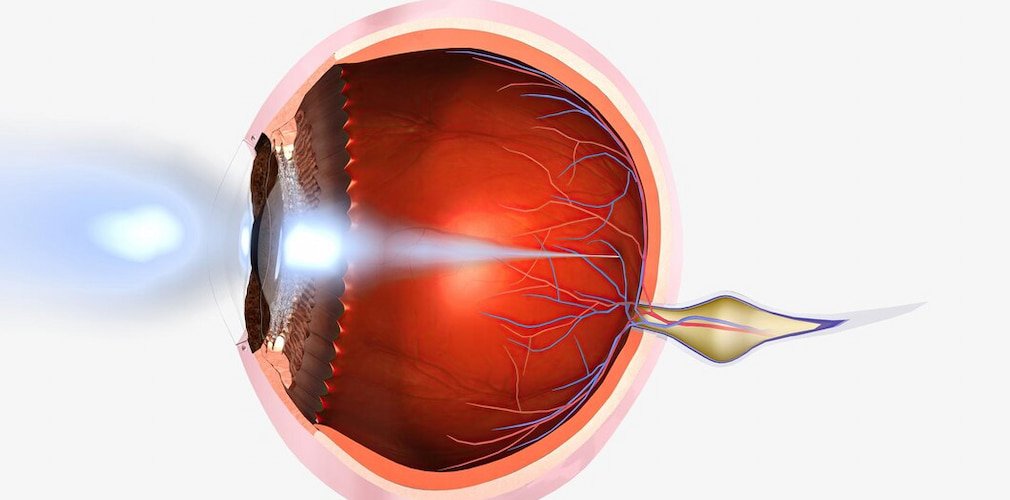
o understand what a posterior vitreous detachment consists of, we must first talk about the structure of the interior of the eye in which it occurs. The vitreous humor is the transparent gel that occupies the inner eye cavity, specifically between the retina and the posterior part of the lens. This gel is composed mostly of water, collagen fibers, hyaluronic acid, and some cells and all this is surrounded by a membrane called hyaloid.
Vitreous detachment occurs, generally, when with age this substance becomes more liquid and acquires mobility and thus causes the hyaloid to separate spontaneously from the retina. This situation occurs more frequently in people older than 65 years.

When the vitreous is detached, in case that symptoms occur, the most frequent is the appearance of “floaters” that are seen suddenly when looking at clear areas and move with the movement of the eyes. This may be due to the vitreous being adhered through the hyaloid to the retina and when detached it can cause small vitreous bleedings or because the junction between the hyaloid and the optic nerve (Weiss ring) becomes visible as opacity.

Despite the annoying vitreous opacities (flying flies or floating bodies) that may appear as a result of detachment, this circumstance is generally innocuous and does not require treatment. The most frequent is that, after a while, we stop visualizing these opacities. If not, the possibility of applying laser vitreolysis to dissolve the vitreous floaters that impede correct vision could be assessed.

Ophthalmological treatment is required in cases in which the movement of the vitreous gel and its separation cause holes or tears that damage the retina. In these cases an Argon laser treatment is applied that generates a barrier around the affected area of the retina and reinforces it.

At Harley Street Hospital, we have the best doctors to diagnose and treat this pathology. Book a consultation to get a specialist´s opinion.

Frequently Asked Questions

Yes, posterior vitreous detachment (PVD) can cause flashing lights, known as photopsia, due to traction on the retina as the vitreous gel separates from the retina.

Flashes and floaters associated with posterior vitreous detachment (PVD) can last for a few weeks to several months as the vitreous gel separates from the retina, but they usually resolve over time. If persistent or accompanied by other symptoms, it’s important to seek evaluation by an eye care professional.

In most cases, floaters caused by posterior vitreous detachment (PVD) will diminish over time, but they may not completely disappear.

What is a Stye?

What is a Stye?

A

 stye is defined as a red, swollen bulge at the eyelid edge originated by an infection of glands. There are no statistics that indicate a predilection for race, age or sex for styes.

Clinical manifestation
The stye usually appears as a small and isolated red bean, located on the eyelid, which when pressed causes pain. It is often
accompanied by discharge, discomfort and tearing. The symptoms are important since the lesion usually associates an allergic-type reaction with inflammation throughout the eye.
In adults, the most common reaction is usually a small nodule with or without a drainage hole and it is also characterized by pain and swelling. Other possible symptoms are tearing and photophobia (discomfort or pain to the eyes due to light exposure). Sometimes the intensity of the discomfort suggests the presence of a foreign body in the eye.

Types of stye

• External or superficial styes: When the drainage orifice is aimed towards the external part of the eyelid, they usually develop in the Zeiss or Moll glands.

• Internal, deep styes: If the orifice is produced in the inside of the eye; they occur in the Meibomian gland.

Risk factors

  •  Systemic factors: dyslipidemia (abnormal amount of lipids), diabetes, ocular congestion (flu, extreme tiredness).
  •  Eye causes: chronic blepharitis, dry eye syndrome, refractive errors, misuse of contact lenses, allergy.
  •  Skin diseases: seborrhea, acne rosacea, allergy.
  •  Exaggerated solar exposure.

Treatment
The basis of all treatment is the heat that causes the orifice to open and drain spontaneously. The procedure is extremely simple and has no collateral complications. Ideally, place a wet compress as hot as the patient can tolerate for 5 to 10 minutes, two or three times a day. More than 50% of the lesions resolve spontaneously.
Some experts recommend the application of topical antibiotics to prevent secondary conjunctivitis or infection for the healthy eye. Others limit its use to cases in which inflammation has spread beyond the tissues adjacent to the stye.
In the event that the stye does not drain within three weeks, local anti-inflammatories are indicated.

During the infectious episode
-Hygiene measures: wash your hands before touching the eyes, and clean with gauze or clean towels exclusively for this problem.
-Do not use cosmetics such as eyelash mascara or eyeliner, nor share them with other people.

Prevention
-Eliminate local and general causes.
-Cleaning the eyelid and the eyelash area with baby shampoo.

Complications of stye

  • Recurrence.
  • Blepharitis (inflammation of the eyelids).
  •  Preseptal cellulitis: extension of the inflammation to the cheeks with general symptoms (fever). The treatment consists of systemic antibiotics for 10 to 14 days.

Frequently Asked Questions

Styes are mainly caused by bacterial infection, typically from Staphylococcus aureus, affecting the oil glands of the eyelid.

Applying warm compresses to the affected eye several times a day can help speed up the healing process of a stye.

A stye typically resolves on its own within 1 to 2 weeks, but proper hygiene practices and warm compresses can help expedite the healing process.

Central Retinal Vein Occlusion

Central Retinal Vein Occlusion

I

t is an obstruction of a vein in the retina, either from the central vein or from one of its branches. The lack of blood return causes a “ponding” of the area altered by the occlusion.

It appears in approximately 1% of the population and represents 1 in every 1,000 consultations. It is more frequent in patients with glaucoma.

Symptomatology
The clinical manifestations depend on the obstructed vein and will be more important the thicker the obstructed vein (the central vein is the most severe) and if they affect the macula.

They are classified as central vein occlusion and venous branch occlusion. If the occluded vein affects the macula, it will cause loss of vision due to edema (ponding) of the macula.

Exploration
The ophthalmologist, when reviewing the fundus, will see the presence of edema of the retina and / or hemorrhages, more extensive the greater the occluded vein.

For their study, fluorescein angiography will be performed to determine the state of the retinal circulation and OCT (Optical Coherence Tomography) will be used as a method to quantify the amount of retinal edema (build-up of fluid).

Follow-Up
In the mild cases due to the involvement of a peripheral vein or in cases of branch with good vision, only a control of the patient will be carried out. But in most cases of branch occlusion and in almost all cases of central occlusion, vision is diminished by edema of the macula and the patient should be treated.

Treatment
It consists in the injection in the eyeball of an antiangiogenic medication or a steroid to control the edema of the retina. The frequency and number of injections will depend on the evolution of the case. There should always be strict control with the OCT to assess the response to treatment. Sometimes it is complemented with the performance of laser in the altered areas of the retina.

At Harley Street Hospital, we have the best doctors to diagnose and treat central retinal vein occlusion. Book an appointment to get a specialist´s opinion.

Frequently Asked Questions

Yes, central retinal vein occlusion is a serious condition that can cause sudden vision loss and requires prompt medical attention to prevent further complications such as permanent vision impairment or blindness.

The hallmark of central retinal vein occlusion is sudden painless vision loss or blurring in one eye, often accompanied by retinal hemorrhages, cotton-wool spots, and dilated tortuous retinal veins on examination. Early diagnosis and treatment are crucial to prevent vision loss.

The treatment for Central Retinal Vein Occlusion (CRVO) may include anti-VEGF injections, steroids, laser therapy, or surgery, depending on the severity and complications associated with the condition, aiming to improve visual outcomes and manage complications like macular edema or neovascularization. Consulting with an ophthalmologist is essential to determine the most appropriate treatment plan.