Cervical Disc Replacement


Cervical Disc Replacement

C

ervical disc replacement is a minimally invasive thechnique to remove a degenerate disc and replace it with a moving prosthesis. The procedure can be performed as a day case procedure by our top spinal specialists.

Movement in the Cervical Spine helps to avoid adjacent-level disc degeneration

The cervical disc´s function is to absorb the loads to which the spine is subjected and to cushion the movements that occur between two contiguous vertebrae.

Regarding the factors that influence the appearance of a cervical hernia, we must differentiate between the acute-soft disc hernia that usually occurs in young patients and whose cause is usually traumatic, and the degenerative disc disease, in which the disk appears disc degenerated and dehydrated, and that is typical of cervical osteoarthritis.

The symptoms are of three types: cervical pain, pain referring to the extremities and spinal cord compression.

The diagnostic studies include first the radiography, an electromyogram (EMG), and finally a Nuclear Magnetic Resonance (NMR), which shows the condition of the discs.

What is cervical disc hernia surgery?

It is fundamentally based on removing the entire disc and replace it by a prosthesis. The approach is usually through the anterior aspect of the neck, separating all the prevertebral structures (carotid and esophagus). With microsurgery the disc is removed, the bone peaks are milled and the nerve or marrow is released. There are different techniques but all are based on removing the disc and replacing it with a prosthesis. Cervical hernia surgery performed by highly trained spine surgeons and is quite safe. If a single disc is operated, the surgery usually lasts 45 to 60 minutes, the next day the patient begins to be incorporated and is discharged on the same day or day after. Recovery is usually very fast and the scar heals satisfactorily.

Cervical disc replacement devices

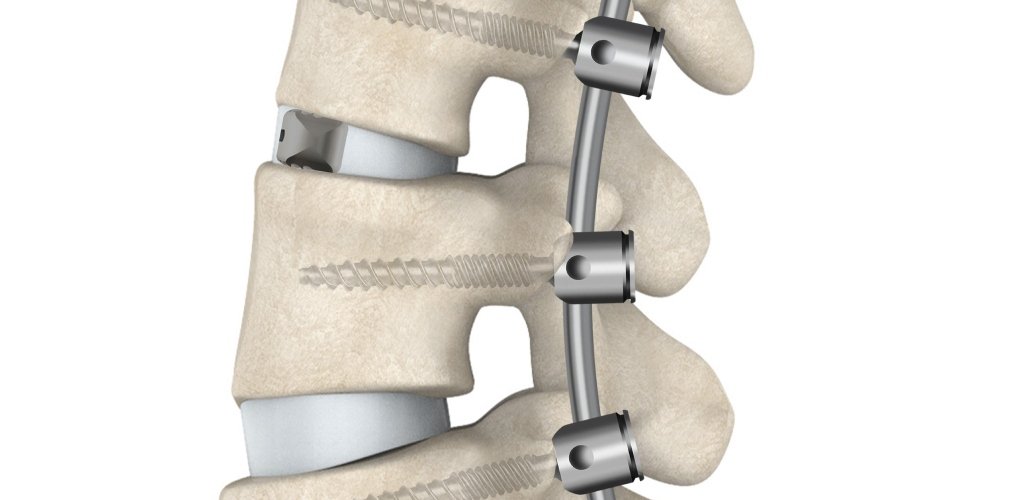
Everything depends on the origin of the hernia: the mobile prosthesis is usually used in soft hernia in young patients without associated degenerative changes. On the other hand, the rigid prostheses are for the other cases or when there is medullar compression, in which it is sometimes necessary to remove one or more vertebrae or to place a plate with screws to favor the stabilization of the spine.

Cervical disc replacement vs. fusion

Recently, fusions have been performed to replace the intervertebral disc, which serves as a buffer between two vertebrae. However, the fusion technique involves adjacent disc degeneration, as a consequence of the increase in the workload suffered by the vertebra situated next to the fused one.

Increasingly, it seeks to preserve as much movement as possible in the spine through the use of prostheses in the intervertebral discs. Prosthetic replacement of the intervertebral disc is a booming technique, which has proven its effectiveness in the short and medium term.

Cervical disc replacement cost

Studies have shown that patients who underwent artificial disc surgery (arthroplasty) have been able to save an average of £4000 in the two years after surgery.

The initial cost of surgery, secondary procedures and medical devices per patient, as well as the cost of the initial procedure, were higher for arthroplasty patients than for fusion patients; however, those who received the artificial disc obtained long-term savings, because they needed fewer secondary procedures and returned to work sooner after surgery than the fusion patients.

Frequently Asked Questions

Cervical disc replacement surgery is generally considered safe and effective, but like any surgical procedure, it carries potential risks, including infection, nerve injury, or complications related to anaesthesia.

Cervical disc replacement surgery has been shown to provide long-term relief from symptoms, with studies indicating that the artificial discs can last for at least 10 to 15 years or more.

Cervical disc replacement surgery has shown high success rates in appropriately selected patients, with many experiencing significant improvement in symptoms and functionality.

Doctors Specialising in Spine Care

What is a Trigger Finger?

What is a Trigger Finger?

L

ith this curious name, perhaps many have imagined the position that the hand has when grasping a gun and pulling the trigger to shoot.
Well, you are right since that in trigger finger, the finger remains as you are imagining it: in general, when performing a complete flexion of the finger, the metacarpophalangeal joint remains in extension while the proximal and distal interphalangeal joints do manage to do some flexion.

What are the causes of trigger finger?

The cause is tenosynovitis of the tendon sheath of the superficial and deep flexor muscles of the fingers, which when inflamed can affect the tendon and form nodules, which prevents or hinders its passage through this tunnel.
The sheath can also thicken, so its diameter decreases, making it difficult for tendons to pass through it. Many times, when trying to extend the finger, the tendon can become stuck at the entrance to the sheath, and once it gets through the tunnel, a sudden extension of the finger may be experienced.

How does this inflammation occur?

Although the cause of the trigger finger is unknown, it is generally common in people with jobs or activities that involve repetitive flexion-extension of the phalanges, over a prolonged period of time, or in the face of intense external pressure.
It is also more frequent in women, in people with diabetes and rheumatoid arthritis, and in people between the ages of 40 and 60.

What are the symptoms of trigger finger?

In the presence of a trigger finger we can sometimes find:

  • A small lump in the palm of the hand.
  • Inflammation.
  • Pressure or paralysis of the finger joints.
  • Pain when flexing the involved finger.
In which cases is the trigger finger more frequent?

This involvement is frequent in both children and adults, however, it occurs mainly in:

  • People over 45 years of age.
  • Female sex.
  • It occurs mostly on the middle and ring fingers. However, on rare occasions, the thumb can also suffer.
  • People suffering from diabetes, rheumatoid arthritis.
  • People who perform tasks or activities that require a constant and repetitive grip with their hands, such as those people who work a long time on the computer.

Frequently Asked Questions

Treatment for trigger finger may involve rest, splinting, anti-inflammatory medications, or corticosteroid injections, with surgical release as an option for severe cases resistant to conservative measures.

The major cause of trigger finger is repetitive gripping or movement, leading to inflammation and narrowing of the tendon sheath in the finger or thumb.

If a trigger finger is not treated, it may worsen over time, leading to increased pain, stiffness, and difficulty in bending or straightening the affected finger. In severe cases, it may result in permanent finger locking or limited mobility.

Doctors Specialising in Orthopaedics

Lorem ipsum dolor sit amet, consectetur adipiscing elit. Ut elit tellus, luctus nec ullamcorper mattis, pulvinar dapibus leo.

Peyronie’s Disease

Peyronie’s Disease

P

eyronie’s disease is a connective tissue disorder that affects the tunica albuginea of the penis. Recent studies suggest that this pathology is due to an inflammatory process with abnormal cicatrization in the tunica albuginea caused by microtraumas during intercourse.

It presents as indurations or plaques, particularly painful with the erection, and also causes a retraction and curvature of the penis. Peyronie’s disease prevents or hinders sexual activity in its late stage, either by significant curvature or by erectile dysfunction.

The evolution of the disease has two phases: The first is the early or inflammatory phase manifests itself with pain and curvature of the penis during erection, It also presents a palpable nodule or induration. This stage of the disease will last approximately 12 to 24 months. In recent studies, it was shown that in 94% of the patients, there was a resolution of coital pain at 18 months. A small percentage of patients present a resolution without sequelae at the end of the inflammatory process.

In the next phase, if the inflammation does not resolve, the tissue involved becomes calcified. This phase is characterized by stability of the curvature, pain and in many cases the presence of sexual dysfunction.

Diagnosis

Currently, the interrogation and physical examination provide valuable information to be able to diagnose the disease. Every patient should be evaluated with a broad clinical history where it is essential to know how the symptoms started, the time of evolution, associated factors, and the family and psychosexual history detailed.

The physical examination is the most important tool, the penis in a state of flaccidity appears completely normal to inspection. in most casesIt is the palpation, which allows doctors to determine the size, position, consistency, and number of indurations. Approximately one-third of patients will develop scarring or calcified plaque that can be observed by ultrasound or simple radiography.

Benefits of Laser Endoscopic Spine Surgery

Benefits of Laser Endoscopic Spine Surgery

L

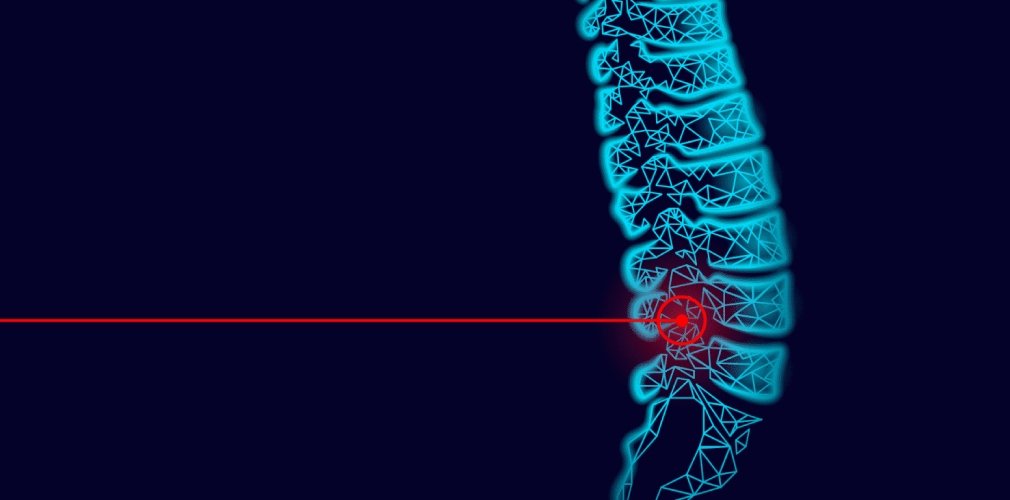
aser spine surgery is a new surgical technique that allows pathologies of the back to be operated through minimally invasive procedures.

It consists of making an incision of less than 2 millimetres that allows the spinal canal to be explored. For this, an endoscopic camera with a channelled optical mechanism connected to a high-definition television screen is used.

This system manages to introduce light and obtain a vision with a high-resolution image of the damaged areas of the spine, visualizing the intervertebral disc and the nerve roots with millimetre sharpness.

Through the optical channel, the different forceps and surgical instruments necessary for the treatment of different pathologies are used.

What are the advantages of laser spine surgery for the patient?
-It is a minimally invasive surgery that only requires a small 2-millimetre incision without scarring.

-It allows to enlarge and magnify the field of work.
-Relief from sciatic and lower back pain is immediate.
-The risk of injury, bleeding and aggression to the muscles is lower, so it reduces postoperative risks.
-Hospitalization is not required and is performed using local anaesthesia.
-Recovery time is reduced, allowing faster incorporation into the patient’s normal and work activity. The return to normal life occurs 24 hours after the intervention and, it is possible, to carry out a rehabilitation-only 15 days after the intervention.
-Postoperative drug intake decreases and even disappears in some cases.

In what pathologies is laser surgery indicated?
Herniated discs: It is the displacement of the soft centre of the intervertebral disc towards the outside due to rupture of the fibrous ring, being able to press on a nerve root or the medullary canal. Normally, herniated discs are located in the lumbar region, with the cervical discs (neck) being the second most affected area.

Lumbar canal stenosis: It is one of the ailments associated with age that normally appears from the age of 60 as people age. It is produced by irritation of the nerve roots that run through the spinal canal when, due to the degeneration of the discs and joints of the spine, the outlet of the nerves to the legs or back is narrowed. This narrowing is called stenosis.

Frequently Asked Questions

The benefits of laser spine surgery may include smaller incisions, reduced soft tissue damage, quicker recovery times, and potentially less post-operative pain compared to traditional open surgery.

Endoscopic spine surgery offers benefits such as smaller incisions, reduced blood loss, faster recovery times, and potentially less post-operative pain compared to traditional open surgery, while effectively treating various spinal conditions.

Laser spine surgery can be successful for certain conditions, offering minimally invasive options with potentially faster recovery times, but its efficacy depends on the specific condition and individual circumstances.

Doctors Specialising in Spine Care

Lorem ipsum dolor sit amet, consectetur adipiscing elit. Ut elit tellus, luctus nec ullamcorper mattis, pulvinar dapibus leo.

Day Surgery TLIF Lumbar Fusion

Day Surgery TLIF Lumbar Fusion

L

umbar fusion or arthrodesis is a technique that has been used for decades to solve instability problems in that region.

Since its inception, arthrodesis techniques have been modified for various purposes: to improve rigidity, to allow better correction of vertebral angulations, to increase the fusion rate, to be able to dispense with external braces, to decrease damage to healthy tissues, to reduce intervention time and bleeding, etc. But not all improvements can always be achieved at the same time, which is why several of the arthrodesis techniques are still in force, constituting a range of options for each case that arises.

TLIF technique
The TLIF arthrodesis, an acronym for “Transforaminal Intersomatic Lumbar Fusion” is a technique that allows both the anterior and the posterior part of the vertebral segment to be fused, but accessing only from one side of the vertebral posterior part. Therefore, it improves the fusion rates and the degree of correction in the same measure as the double accesses (anterior-posterior), but it simplifies the task and the risks when using a single approach and a single side.


Тhe procedure
Access to the disc (anterior part) is made through the neural foramen, that is, the hole through which each lumbar root comes out. But since the size of the foramina is insufficient to introduce implants, the technique requires removing the articular assembly (facets) and associating a fixation with pedicle screws. One of the disadvantages of TLIF is that manipulation of the neural ganglion in the foramen, especially when inserting the implant, can cause postoperative (usually transient) sciatica or long-term residual sensory discomfort. Postoperative sciatica is especially common after large corrections in height and disc displacement (spondylolisthesis). This problem gradually disappears in 5-7 weeks.

The advantages of TLIF
Because it is a foramen access technique, which allows a high degree of correction and ensures the success of the fusion, it is especially useful when it is necessary to reach the foramen (foraminal stenosis), when there are degenerative deformities (scoliosis and degenerative spondylolisthesis), or when the posterior fusion alone does not guarantee stability (isthmic spondylolisthesis). Due to its tendency to cause root discomfort in the postoperative period, it should perhaps be avoided in cases of pure lumbar involvement without canal involvement, thus avoiding any unnecessary neural manipulation.

Frequently Asked Questions

TLIF (Transforaminal Lumbar Interbody Fusion) is a minimally invasive surgical technique used to treat conditions such as degenerative disc disease or spinal instability by fusing vertebrae together through an incision in the back, typically performed as a day surgery procedure.

Day surgery TLIF lumbar fusion offers advantages such as reduced hospital stay, quicker recovery times, decreased risk of complications associated with prolonged hospitalisation, and the convenience of returning home on the same day.

Recovery involves gradually increasing activity levels, adhering to post-operative instructions for wound care and pain management, attending follow-up appointments, and participating in physical therapy to optimise healing and regain strength and mobility.

Doctors Specialising in Spine Care

Lorem ipsum dolor sit amet, consectetur adipiscing elit. Ut elit tellus, luctus nec ullamcorper mattis, pulvinar dapibus leo.